Viola & Misr El Kheir: Turning Climate Issues into Stories People Can Understand
How do you communicate complex climate issues in a way that is informative, engaging, and accessible to a wide audience?
This was the central challenge behind Viola’s collaboration with Misr El Kheir on a series of three short awareness films addressing climate change and real-world climate-related issues. The project came as part of a collaboration between UNESCO and Misr El Kheir, with the goal of creating awareness-driven content that could communicate important climate issues not only to the general public, but also to people and institutions involved in decision-making and shaping policies.
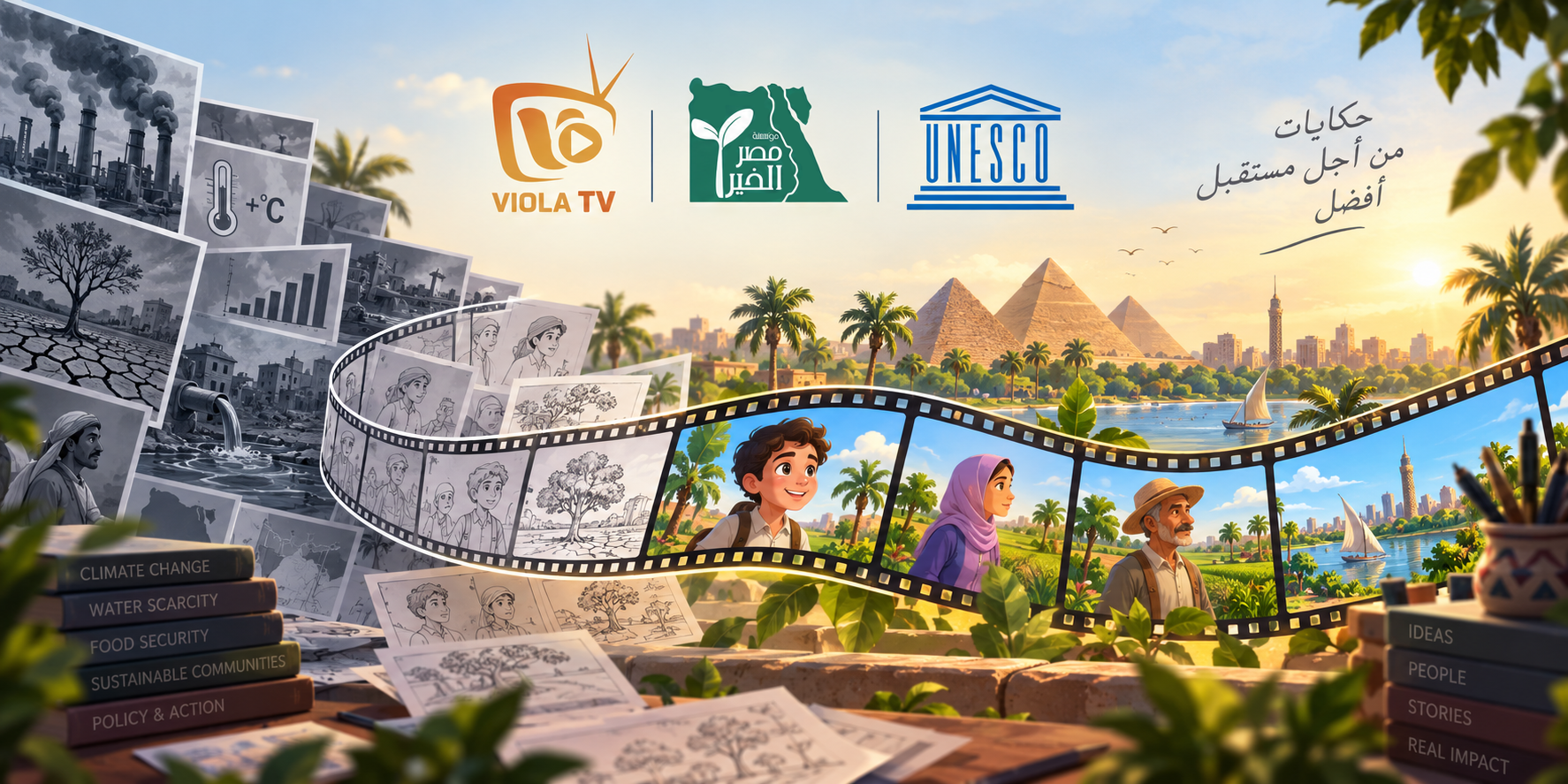
مؤسسة مصر الخير × Viola TV Animation Studio × UNESCO
Turning Climate Issues into Stories People Can Understand • سلسلة الأفلام التوعوية البيئية
Misr El Kheir approached Viola to bring these ideas to life through animation. The brief, however, was not simply to create animated videos. It was to take complex and sensitive real-world issues and transform them into clear, meaningful visual stories that could communicate effectively with an adult audience without becoming overly technical, academic, or difficult to follow.
That became the foundation of our creative approach.
From Real Issues to Meaningful Stories
One of the first challenges was deciding which climate issues could be translated effectively into short-form storytelling. Climate change is a broad subject that involves science, economics, communities, public policy, and environmental consequences. Many of the issues are interconnected and can require significant context to fully understand.
Our task was to identify the core message behind each topic and find a narrative approach that could communicate it clearly within a limited format. The stories therefore had to be more than fictional scenarios built around a general idea. They needed to remain grounded in real climate challenges.
This meant that research and story development were essential parts of the process. The creative freedom came from how we chose to tell the story—not from inventing the underlying problem. The objective was to make real issues easier to understand without oversimplifying their significance.
The Narrative Mandate
"The creative freedom came from how we chose to tell the story—not from inventing the underlying problem. The objective was to make real issues easier to understand without oversimplifying their significance."
Making Complex Ideas Visual
One of the key advantages of animation is its ability to visualize concepts that can be difficult to communicate through conventional live-action footage. For this project, the visual language had to do more than simply illustrate what was being said.
The 2D animation style was chosen as a way to create a clear, flexible visual environment in which complex ideas could be represented through characters, situations, movement, and visual metaphors. Every scene had to serve a purpose.
If the voice-over explained an idea, the visuals needed to reinforce or expand that idea rather than simply repeat it. The storytelling had to work as a unified combination of writing, visual direction, animation, and sound. This required close attention to pacing, composition, character movement, transitions, and the relationship between the narration and what the audience was seeing on screen.
The Core Creative Principle
Make the audience understand the idea through the story, not through a lecture.
The Challenge of Language
Language presented another important challenge. Because the project was designed around climate awareness and had an audience extending beyond a single local context, choosing the right form of Arabic was particularly important.
Traditional Modern Standard Arabic provided the formal and professional tone required for the subject, but could sometimes feel too formal or complex for a broad audience. Egyptian Arabic, on the other hand, would provide a more familiar and conversational tone, but could make the content feel more locally specific and less universally accessible across different Arabic-speaking audiences.
We therefore looked for a middle ground. The solution was a simplified, neutral form of Arabic closer to journalistic language: clear and polished, while avoiding unnecessarily complex formal constructions and avoiding a specific regional dialect.
The intention was to create language that sounded natural when spoken, remained professional, and could be understood by Arabic-speaking audiences from different backgrounds. This approach also influenced the voice-over performance: the words, delivery, rhythm, emphasis, and pacing all had to work together to make the information feel accessible rather than instructional.
One Message, Multiple Disciplines
The project required close coordination between several creative disciplines:
- The script could not be developed independently from the animation.
- The animation could not be developed independently from the voice-over.
- The sound could not simply be added after the visuals were complete.
Each element had to support the others. A sentence had to be written with spoken delivery in mind. A visual had to add meaning rather than duplicate the narration. The pacing of the animation had to give the audience enough time to process the information. The sound design had to support the emotional and informational rhythm of each scene.
This made the project a collaborative process from beginning to end.
The Viola Team
The project was led and executed by a dedicated team at Viola, with each member contributing to a different stage of the production:
Ahmed El-Morsy
Project Manager & Story WriterOverseeing the project while developing the stories and translating core climate issues into narrative concepts.
Amr Mamdouh
Drawing & 2D AnimationResponsible for the visual execution of the films, turning scripts and concepts into the final visual experience.
Hajar Hesham
Voice-Over PerformanceProvided the voice-over performance, bringing written stories to life and establishing appropriate tone and pacing.
Moataz Saeed
Sound EngineerHandled the audio side, ensuring voice-over and sound elements worked harmoniously with animation.
The collaboration between these roles was essential to maintaining consistency between the message, the visuals, and the sound.
Working Within Real-World Constraints
As with any production project, the creative process also had to operate within defined deadlines and delivery requirements. The challenge was to maintain accuracy and quality while moving through story development, language refinement, voice-over recording, visual production, animation, sound, revisions, and final delivery within the required timeframe.
For awareness content, this balance becomes particularly important. The goal is not simply to finish a video on time. Every element has to communicate the intended message accurately and clearly.
That meant reviewing the work from multiple perspectives throughout the process:
- Is the information clear?
- Is the story understandable?
- Does the visual language support the message?
- Does the narration feel natural?
- Does the final film communicate the issue without making it unnecessarily complicated?
What We Learned
The experience reinforced an important principle for us at Viola: effective awareness content does not begin with the question, “How can we make this look good?”
It begins with a more fundamental question:
“How can we make people understand this?”
From there, animation becomes a communication tool rather than simply a visual style.
The strength of 2D animation lies not only in its ability to create engaging characters and visual worlds, but also in its ability to simplify complex ideas, visualize invisible or abstract concepts, and make serious subjects more approachable.
Through our collaboration with Misr El Kheir, we had the opportunity to apply that approach to a subject with real-world consequences. Three films became three opportunities to take complex climate issues and translate them into stories that people could see, follow, and understand.
For Viola, the project was a valuable reminder that sometimes the most effective way to communicate a complex issue is not to say more—but to find a better way of telling the story.
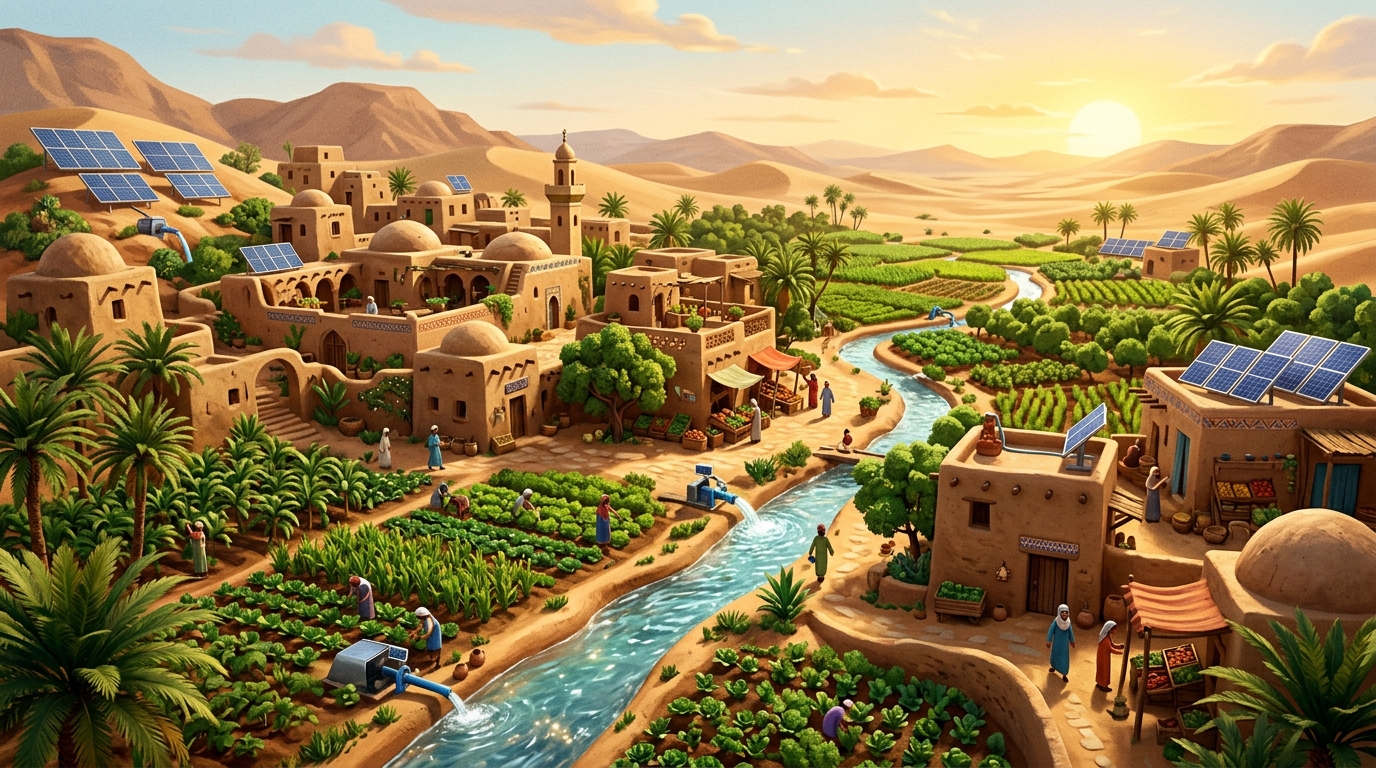
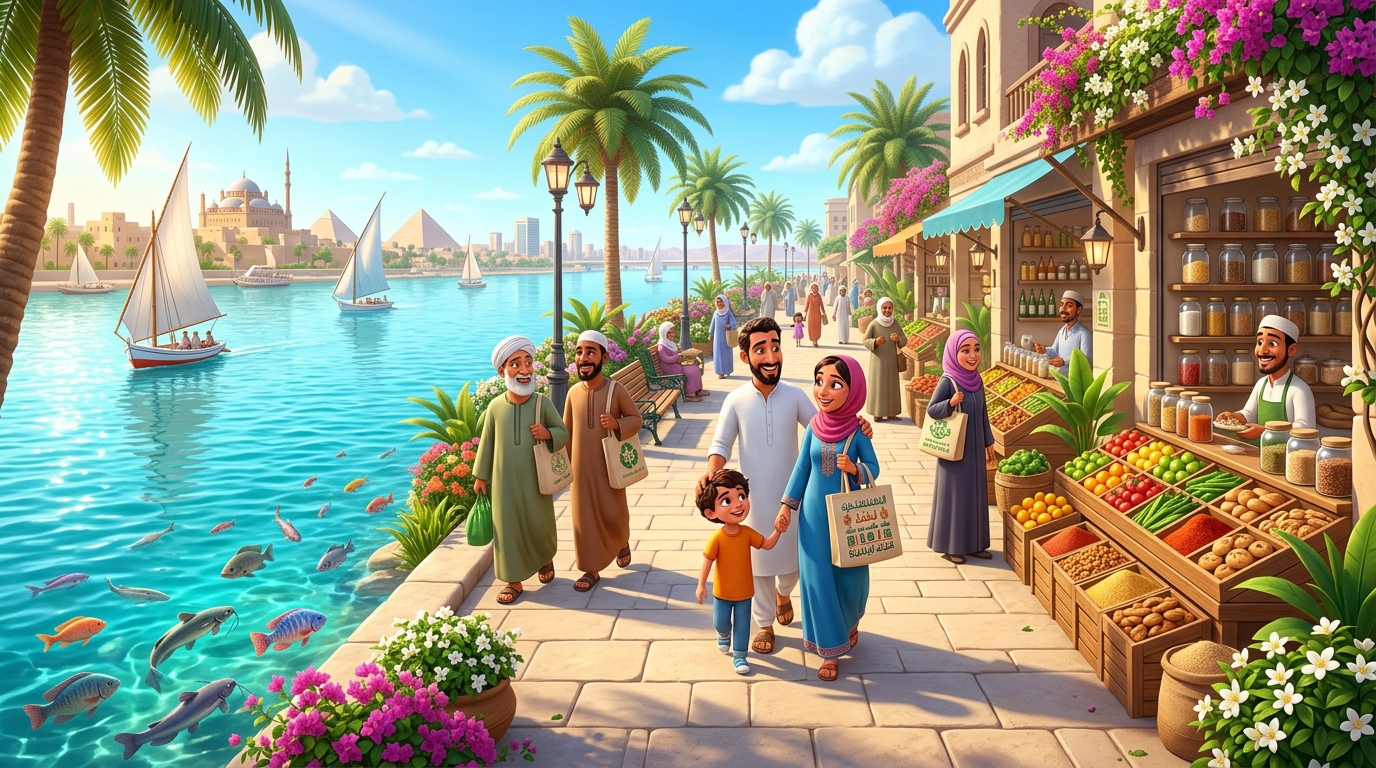
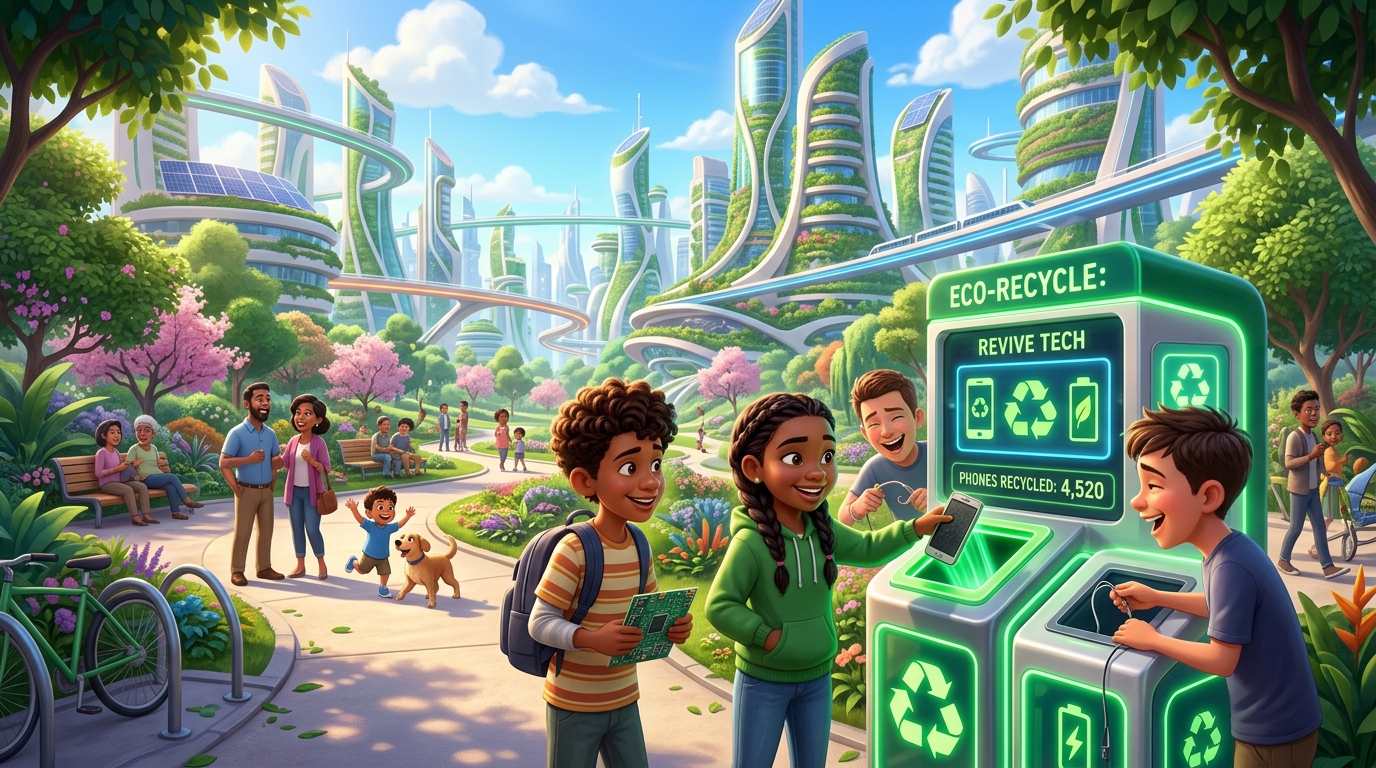
The Awareness Trilogy: Three Critical Frontlines
Each film in the series tackles a distinct real-world environmental crisis, turning scientific insight into compelling human narratives supported by practical solutions: