The Art of Bringing Characters to Life: Animation Principles That Never Go Out of Style
Great animation transcends technology. Whether you're working with pencils, tablets, or 3D software, certain fundamental principles remain essential for creating believable, engaging character animation.
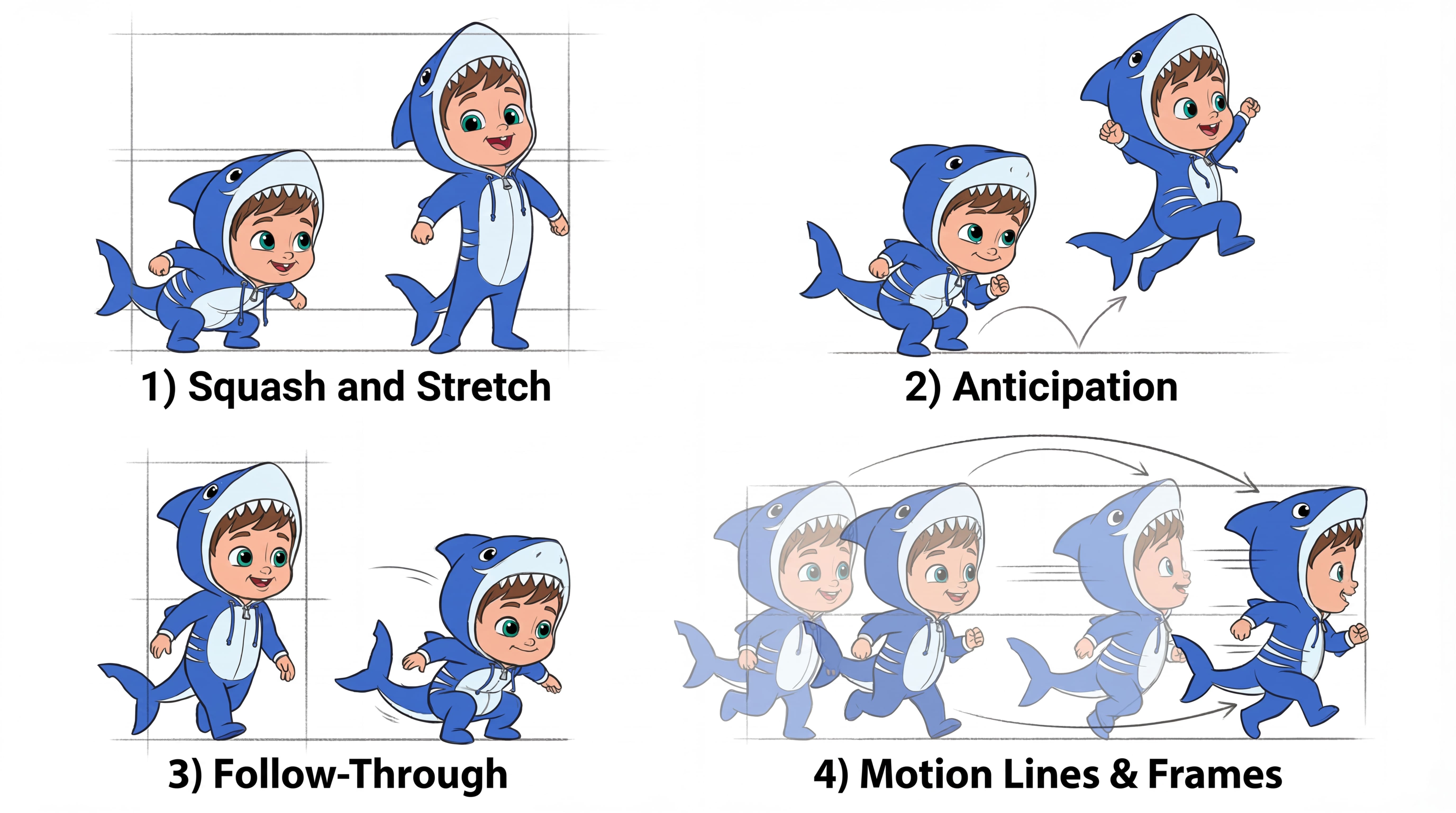
Squash and Stretch
This principle gives your characters weight and flexibility. A bouncing ball squashes when it hits the ground and stretches as it bounces up. Characters' faces squash and stretch to convey emotion. This principle works equally well in 2D and 3D, adding life and energy to movements.
The key is maintaining volume—when something stretches, it should thin out, and when it squashes, it should widen. This creates the illusion of a flexible, living form rather than a rigid object.
Anticipation
Before any major action, there's anticipation. A character crouches before jumping, pulls back their arm before throwing, or takes a breath before speaking. This telegraphs actions to the audience and makes movements feel natural and intentional.
Anticipation also helps viewers follow the action. Without it, movements can feel sudden and confusing. It's the wind-up that makes the pitch powerful.
Staging
Good staging directs the viewer's attention to what's important in each scene. Through composition, lighting, and character placement, you guide the audience's eye. Clear staging ensures your story beats land effectively, regardless of your animation medium.
Think of each frame as a piece of visual storytelling. The most important element should be immediately clear, with supporting elements arranged to reinforce rather than distract from the main action.
Follow Through and Overlapping Action
Not everything stops at once. Hair keeps moving after a head stops turning, clothes settle after a character stops walking, and arms swing past the body before reversing direction. These details make animation feel real and add production value.
Different parts of the body mov... (line truncated to 2000 chars)