The Evolution of Character Animation: From 2D to 3D
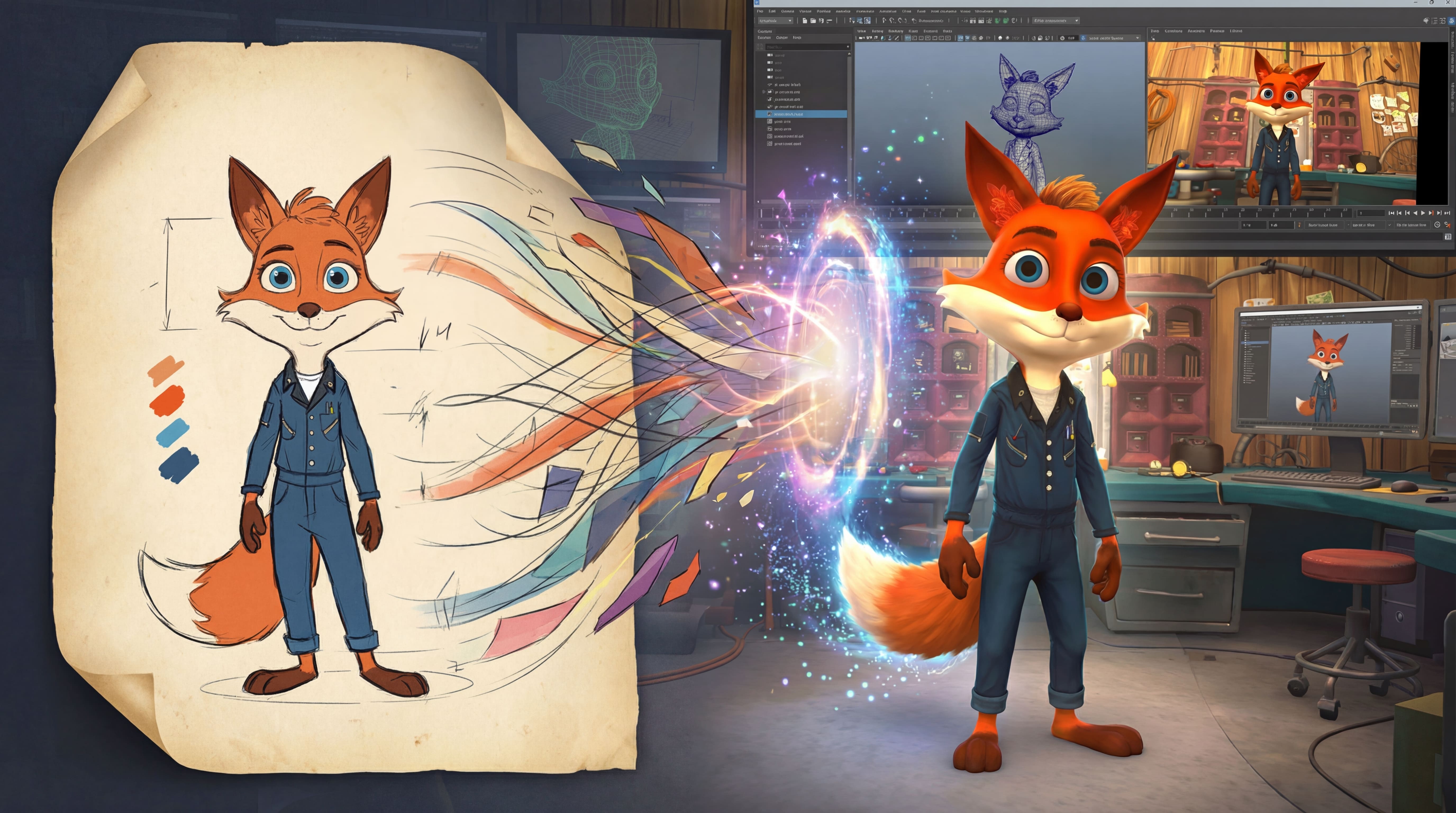
Animation has come a long way since the days of hand-drawn cells and flip books. Today's animation studios work across both 2D and 3D mediums, each offering unique advantages for storytelling and visual expression.
The Golden Age of 2D Animation
Traditional 2D animation continues to captivate audiences with its artistic charm and expressive style. Studios like Studio Ghibli have proven that 2D animation remains timeless, offering a hand-crafted feel that resonates emotionally with viewers. The technique allows for exaggerated expressions, fluid movements, and a painterly aesthetic that's difficult to replicate in other mediums.
The painstaking process of hand-drawing each frame created some of cinema's most beloved characters. From Mickey Mouse to modern classics, 2D animation has a warmth and personality that still captures hearts today.
The Rise of 3D Animation
Meanwhile, 3D animation has revolutionized the industry by introducing unprecedented depth, realism, and technical possibilities. From Pixar's groundbreaking work to the stunning environments in modern animated films, 3D animation enables creators to build immersive worlds with dynamic lighting, realistic textures, and complex camera movements.
The technology allows for photorealistic rendering, intricate details, and visual effects that were impossible with traditional methods. Characters can be viewed from any angle, environments can be explored freely, and the possibilities are virtually limitless.
The Hybrid Approach
The most exciting development? Many studios now blend both techniques. Hybrid approaches combine the warmth of 2D with the dimensionality of 3D, creating unique visual styles that push creative boundaries. Films like 'Spider-Man: Into the Spider-Verse' have demonstrated how mixing techniques can result in fresh, innovative aesthetics.
Whether your project calls for the classic appeal of 2D or the modern sophi... (line truncated to 2000 chars)